Sulcolithos variabilis Knaust, 2020
Synonymy
| 2024 | Sulcolithos variabilis Knaust, 2020 | Knaust & Schnick | 8 | 4G–I | Knaust & Schnick, 2024 |
| 2020 | Sulcolithos variabilis isp. nov. | Knaust | | 2 | Knaust, 2020a |
| 2019 | Macrobioerosional grooves on trepostome bryozoa | Toom, Vinn & Hints | | 6I, J | Toom et al., 2019a |
| 2019 | non macrobioerosional groove | Toom, Vinn & Hints | | 6A | Toom et al., 2019a |
| 2019 | Sulcichnus isp. | Toom, Vinn & Hints | | 6C | Toom et al., 2019a |
| 2014 | non Sulcolithus variabilis | Vinn et al. | | 4 | Vinn et al., 2014c |
| 2010 | non Sulcolithus variabilis | Vinn & Wilson | | 3 | Vinn & Wilson, 2010b |
Type specimens
Descriptions and remarks
Diagnosis: Grooves unbranched or with short acorn-, bulbor lance-shaped side-branches.
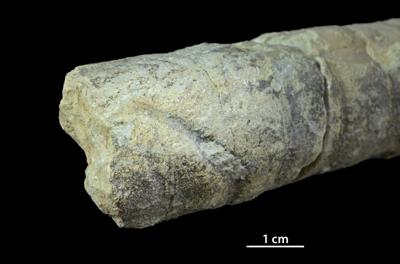
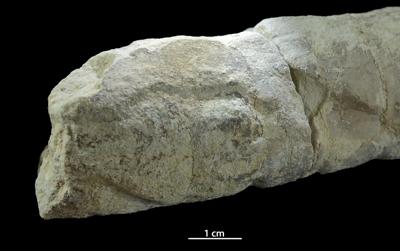
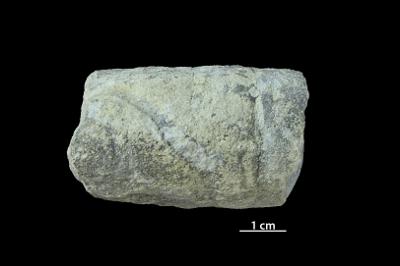
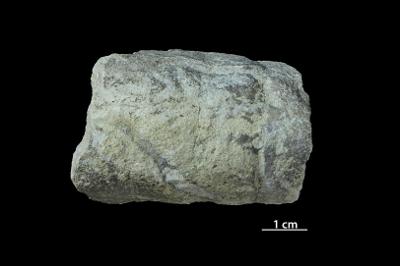
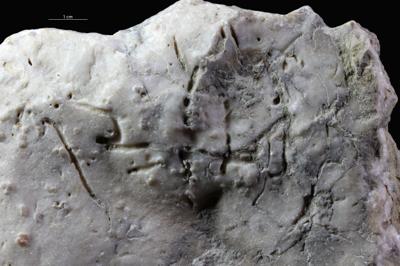
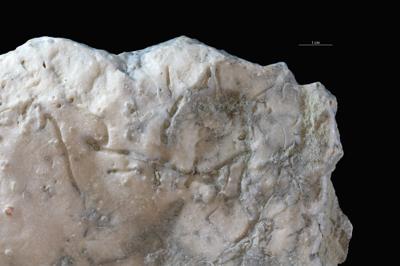
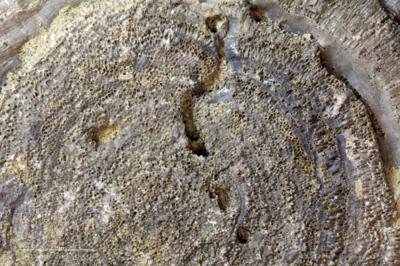
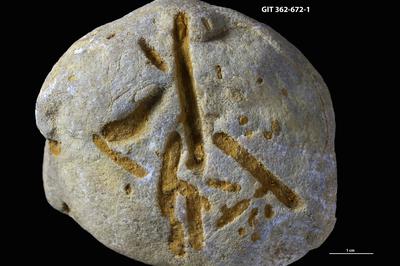
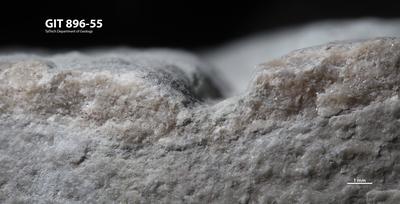
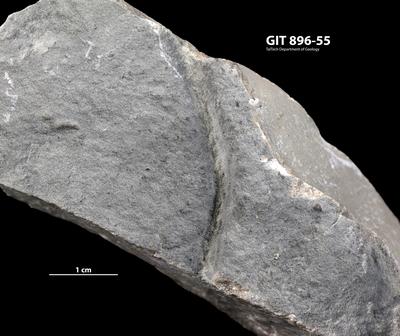
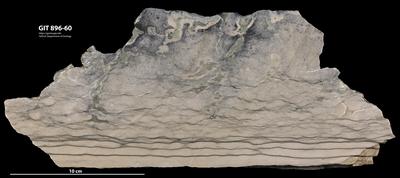
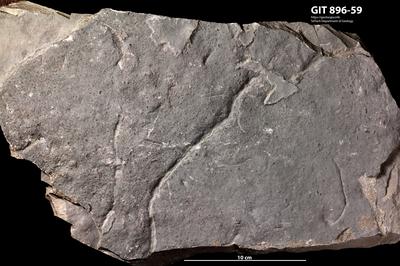
Description: The holotype and paratypes occur on the upper bedding plane of a micritic limestone bed (ca. 10 cm thick) with an area of ca. 430 cm2 . The bedding plane contains various sharply outlined burrows that document frm- to hardground conditions and displays over a dozen of grooves assignable to S. variabilis. The grooves are associated with several shallow pits with irregular elliptical outline and with similar dimensions. Moreover, numerous smaller pits with an elongate, elliptical or curved outline are scattered on the surface. Some circular apertures belong to tubular shafts ca. 2 mm in diameter as parts of Trypanites weisei Mägdefrau, 1932.
Occurrences
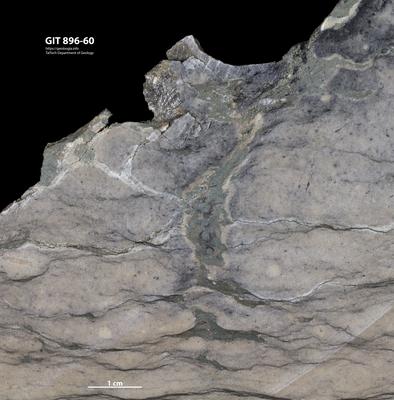
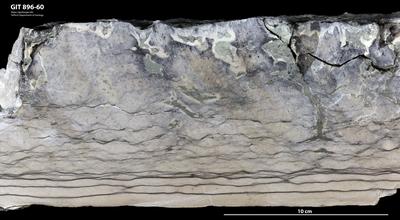
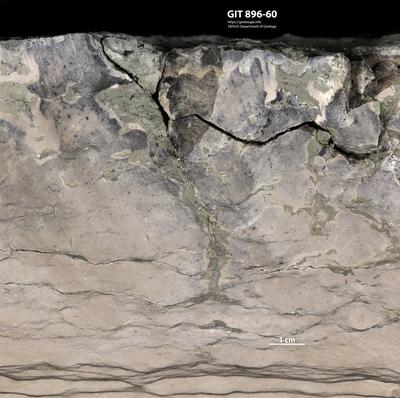
Specimens with images (33)









Browse Categories of Architectural Design (CADs):
Borings with elliptical to sub-rectangular cross sections | Branched tubular borings | Camerate boxwork borings | Camerate network borings | Circular holes and pit-shaped borings | Clavate-shaped borings | Cylindrical vertical to oblique borings | Dendritic and rosetted borings | Elongate or branched attachment bioerosion traces | Fracture-shaped bioerosion traces | Globular to spherical borings | Groove bioerosion traces | Multiple attachment bioerosion traces | Non-camerate boxwork borings | Non-camerate network borings | Pouch borings | Radial borings | Single circular to tear-shaped attachment bioerosion traces | Spiral borings | Trackways and scratch imprints | U-shaped borings | Winding borings |