Osprioneides kampto Beuck et Wisshak, 2008
Synonymy
Type specimens
Descriptions and remarks
Diagnosis. Large, straight to irregularly bent, unlined boring of variable length entering the substrate perpendicular to subparallel; cross−section oval; roughly constant oval diameter; terminus tapered to rounded.
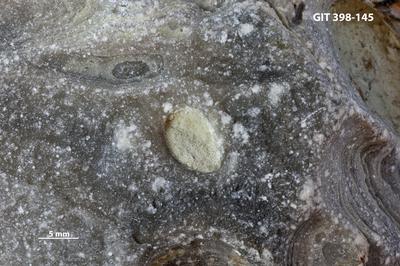
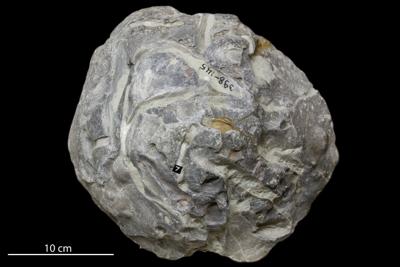
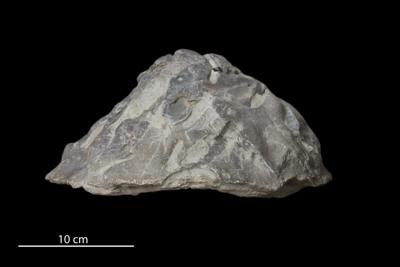
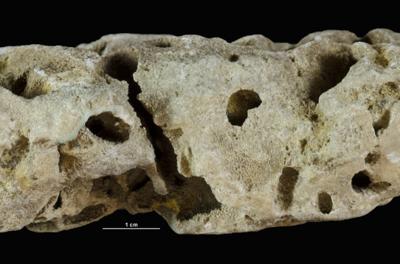
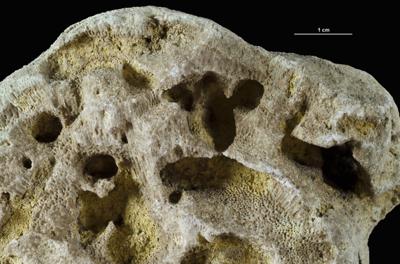
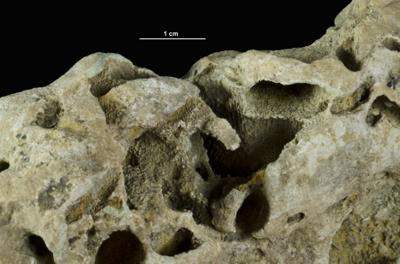
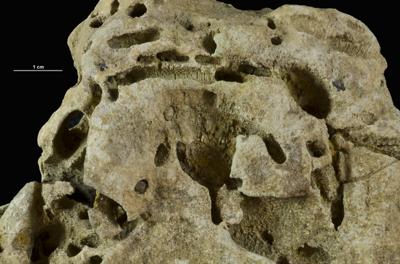
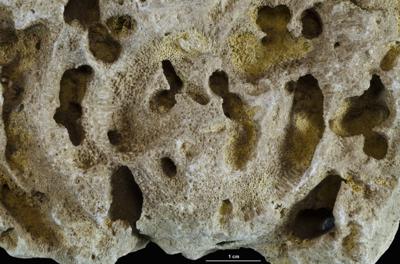
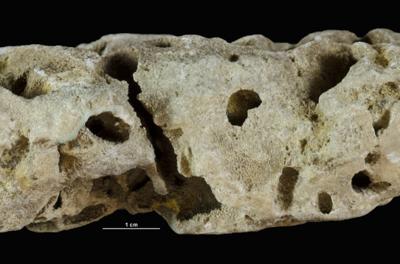
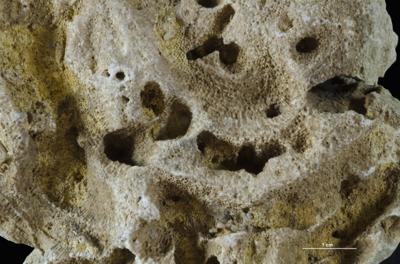
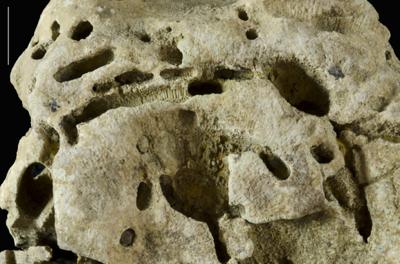
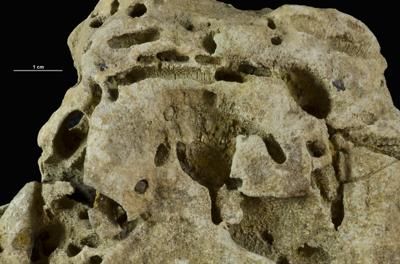
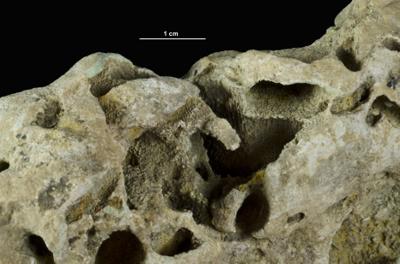
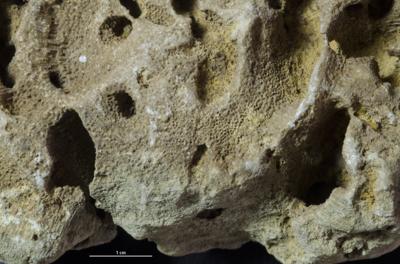
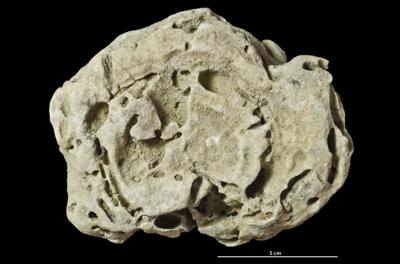
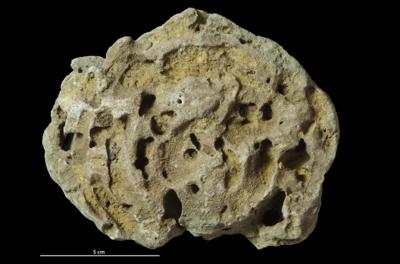
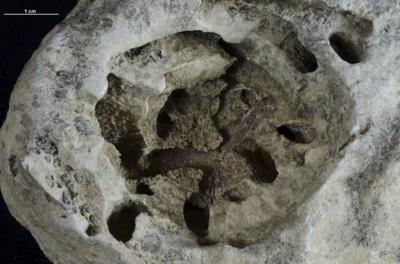
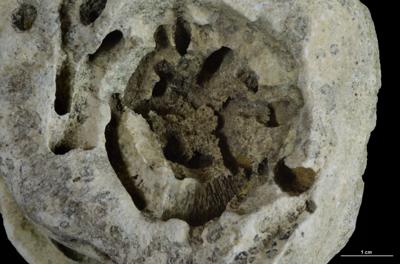
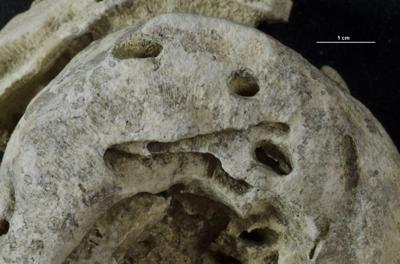
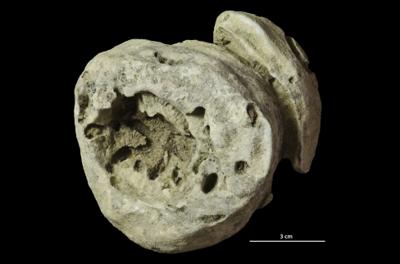
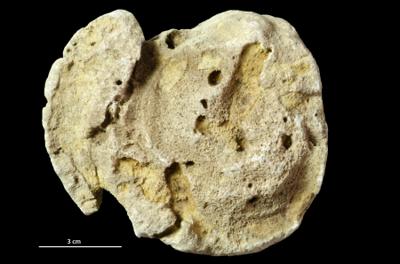
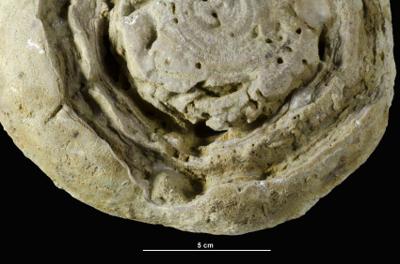
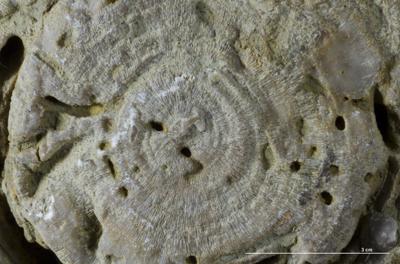
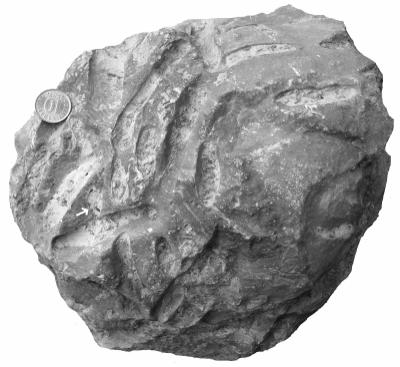
Description. From a single oval aperture, the unbranched borings are sharply incised in the dense host skeleton, showing no deflections of the host growth increments, and are filled with a micritic matrix (Figs. 3, 4). The borings enter the substrate in a perpendicular to subparallel manner and follow primarily a straight course but may as well slightly curve or undulate. Individual traces measure up to 120 mm in length with an oval cross−section of averaging 7 (min. 5) × 13 (max. 17) mm in diameter, with a max/min ratio in excess of 2/1. Individual borings have a tapered to rounded terminus. Due to the high−abundance of traces within the sample analysed, borings occasionally truncate each other, occasionally resembling a branching pattern. Neither scratch marks nor any internal lining were observed. An idealised schematic drawing of the trace is given in Fig. 8.
Occurrences
Specimens with images (24)
Browse Categories of Architectural Design (CADs):
Borings with elliptical to sub-rectangular cross sections | Branched tubular borings | Camerate boxwork borings | Camerate network borings | Circular holes and pit-shaped borings | Clavate-shaped borings | Cylindrical vertical to oblique borings | Dendritic and rosetted borings | Elongate or branched attachment bioerosion traces | Fracture-shaped bioerosion traces | Globular to spherical borings | Groove bioerosion traces | Multiple attachment bioerosion traces | Non-camerate boxwork borings | Non-camerate network borings | Pouch borings | Radial borings | Single circular to tear-shaped attachment bioerosion traces | Spiral borings | Trackways and scratch imprints | U-shaped borings | Winding borings |